
Seven full days · Seven nights · Monday to Monday
The PalestineExperience.
See Palestine through the people who live here.
A Palestinian-led journey from Jerusalem to the South Hebron Hills, created for first-time visitors who want to understand the country beyond its headlines and holy sites.
JerusalemBethlehemHebronNablusRamallahJerichoBeit UmmarSouth Hebron Hills
You will walk through Jerusalem's Old City, visit Bethlehem and Hebron, travel north to Nablus, explore Ramallah and ancient Jericho, and spend three nights with Mousa's family in the village of Beit Ummar.
Along the way, you will meet Palestinian families, guides, farmers, activists, craftspeople, and refugee camp residents. You will eat in local homes, walk through cities and villages, and see how occupation, history, faith, resistance, and everyday life exist beside one another.
You want to visit Palestine.We make the journey possible.
Many people want to come, but do not know where to begin.
Can I enter? Is it safe? Where should I stay? How will I move between cities? Who can I trust? How do I make sure my visit supports Palestinians?
The Palestine Experience removes the uncertainty of planning the journey alone. The route is prepared. Your guides, drivers, hosts, and local contacts are Palestinian. Before you arrive, we help you understand the logistics and what to expect. Throughout the trip, you travel with people who know the roads, communities, checkpoints, and changing conditions on the ground.
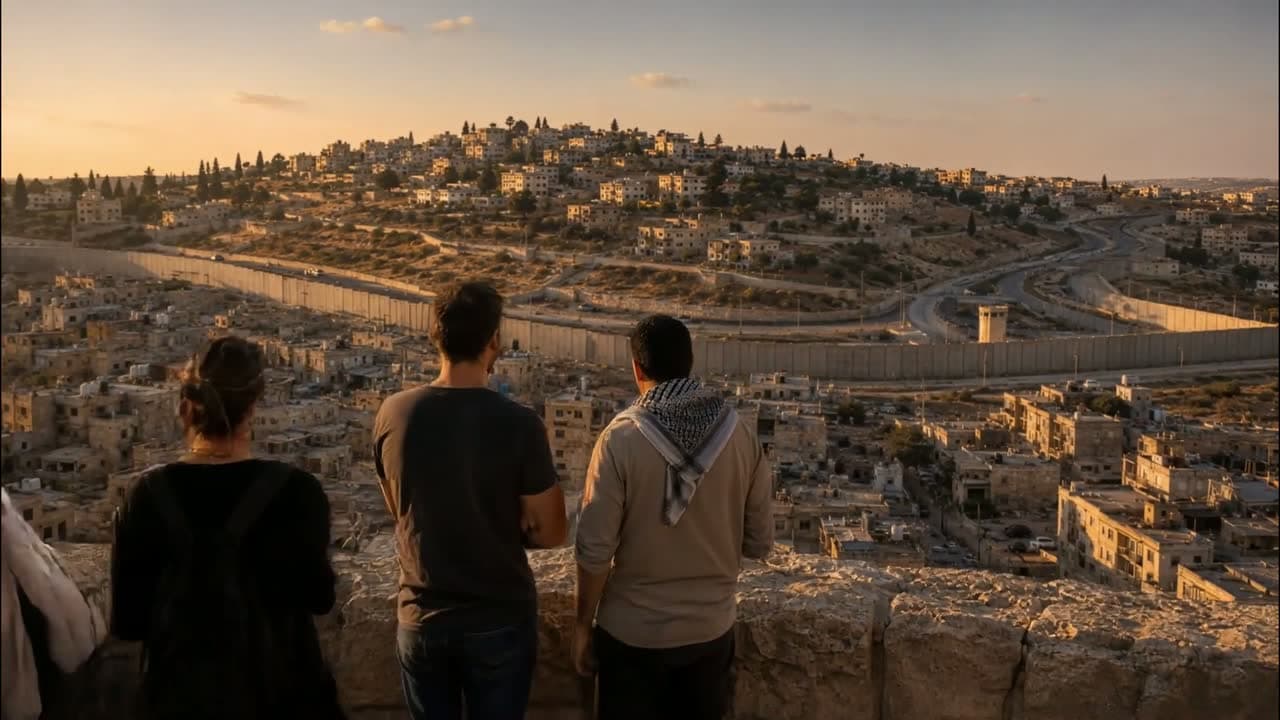
This does not mean placing you inside a protected tourist bubble. You will see walls, settlements, checkpoints, segregated roads, refugee camps, land confiscation, and communities living under pressure.
But Palestine is not only what has been done to it.
You will also see family homes, markets, ancient streets, olive groves, workshops, places of worship, village life, hospitality, humour, and people building full lives under difficult circumstances.
This trip brings those realities together.
Monday to Monday
The journey.
It begins Monday at 9:00 at the Jerusalem Hotel Café and ends the following Monday morning back in Jerusalem. Open any day to read it in full.
At 9:00 in the morning, you will meet the group at the Jerusalem Hotel Café. The journey begins with a briefing using maps to help you understand the route, the geography, and the political reality you will encounter during the week.
From there, you will take an alternative tour through Jerusalem's Old City. You will visit the Western Wall and the Church of the Holy Sepulchre, while also seeing the Israeli settler homes established throughout the Muslim Quarter. Your guide will explain how Israeli settlement activity is changing the Old City and the Palestinian neighbourhoods surrounding it.
After lunch, you will leave the centre of Jerusalem and travel through the wider city. The route includes the settlements of Pisgat Ze'ev and Har Homa, the Palestinian neighbourhoods of Beit Hanina and Anata, the Separation Barrier, and the segregated road system that shapes how people move through the area.
By the end of the day, you will have seen both the historic centre shown to millions of visitors and the wider system that is usually left outside the tour.
In the evening, you will travel to Beit Sahour and meet the Palestinian family who will host you.
Today you will travel with a Palestinian guide through Bethlehem and Hebron. The day begins by looking back toward Har Homa, the settlement you saw from Jerusalem the previous day. This time, you will see it from the Palestinian side of the Separation Barrier.
You will walk beside the wall surrounding Bethlehem and learn how it affects the movement, land, economy, and everyday lives of local Palestinians. The wall has also become a public canvas: you will see political art and graffiti created by Palestinian and international artists, including work associated with Banksy.
At Aida Refugee Camp, you will meet a representative from the local youth centre. You will have the opportunity to speak with people from the camp, hear their personal stories, and understand what life looks like inside a refugee camp that has existed for generations.
You will then visit the Walled Off Hotel. Its museum explains the history and present reality of the occupation through art and historical material, while its gallery provides Palestinian artists with a space to exhibit their work. From there, you will continue to Manger Square, the Church of the Nativity, and Bethlehem's Old City.
Later, the journey continues south to Hebron. Along the road, you will see Israeli settlements and learn about the home demolitions and movement restrictions affecting Palestinians in the area.
Inside Hebron, you will visit the Tomb of Abraham and walk through the city's market. Parts of this once-thriving commercial centre have been emptied or placed under severe restrictions as Israeli settler strongholds have expanded inside the city. There will also be time to shop from Palestinian traders who continue working in the market.
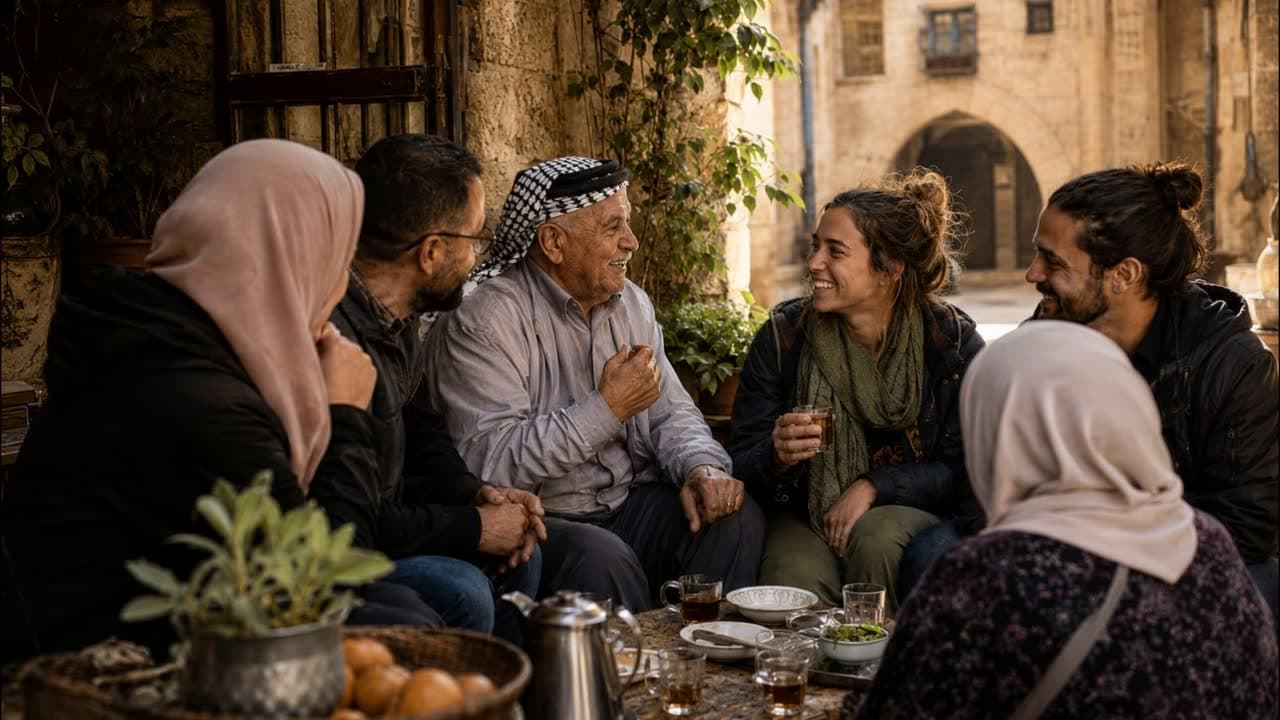
Tea first. Questions after. You will be picked up early and travel north along Route 60, the main road running through the spine of the West Bank. Along the journey, you will pass Palestinian villages and numerous Israeli settlements.
Your first major stop is the Samaritan village on Mount Gerizim. The Samaritans are one of the world's smallest and oldest religious communities. You will learn about their history, traditions, and how the community has survived despite the pressures and changes around it.
From Mount Gerizim, you will continue to Balata Refugee Camp. You will see the camp's crowded living conditions, hear stories about life there, and visit a local organization working to support residents.
The journey then moves into Nablus itself. You will walk through the Old City's labyrinth of Ottoman buildings, visit the traditional Turkish baths, and see how olive-oil soap is produced in one of the city's historic factories. You will also visit Jacob's Well, the deep well traditionally associated with Jacob and with the story of Jesus speaking to a Samaritan woman.
Nablus brings together religion, commerce, craft, refugee life, and thousands of years of history inside one living city.
You will leave Bethlehem and travel around the eastern side of Jerusalem through the Judean Desert toward Ramallah. Along the route, you will see Israeli settlements positioned across the landscape.
You will enter Ramallah through a checkpoint into Kufr Aqab. Although Kufr Aqab is officially part of the Jerusalem municipality and its residents pay Jerusalem city taxes, the Separation Wall cuts the neighbourhood off from the rest of the city. Your guide will explain what this contradiction means for the people living there.
In Ramallah, you will visit Yasser Arafat's tomb and walk through the streets of the bustling city that now serves as the de facto political and administrative capital of Palestinians in the West Bank. Ramallah offers a different view of Palestinian life: a city of government offices, businesses, cafés, shops, universities, families, cultural life, and constant movement.
After lunch, you will travel east to Jericho. You will see the Mount of Temptation before exploring the ancient city itself. The afternoon includes Tel es-Sultan, the archaeological mound associated with ancient Jericho, and Hisham's Palace, known for its architecture and remarkably preserved mosaics.
The day moves between the present-day political centre of the West Bank and a city whose history reaches back thousands of years.
You will travel south from Bethlehem to the Palestinian village of Beit Ummar. On arrival, you will meet your host, Mousa, and settle into his family home, where you will spend the next three nights.
Accommodation is in comfortable dormitory-style rooms inside the family home. The house has shared lounge areas, a balcony, outdoor spaces, and wireless internet. Hot drinks are always available in the kitchen. You are invited to help yourself and make the house feel like home.
You can sit beneath an olive tree, spend time with the family, use the lounge, or step outside and walk through the village.
During the day, Mousa will take you through Beit Ummar to meet local families and learn about their lives. You will hear how land confiscation, settlement expansion, and settler activity affect the village and the families living there. Beit Ummar is a Palestinian Muslim village located between Bethlehem and Hebron, inside the area dominated by Israel's Gush Etzion settlement bloc.
The formal activities are only part of the experience. You are encouraged to walk around, meet residents, sit with people, and absorb the rhythm of the village. The nearby countryside also offers space to walk among the olive groves.
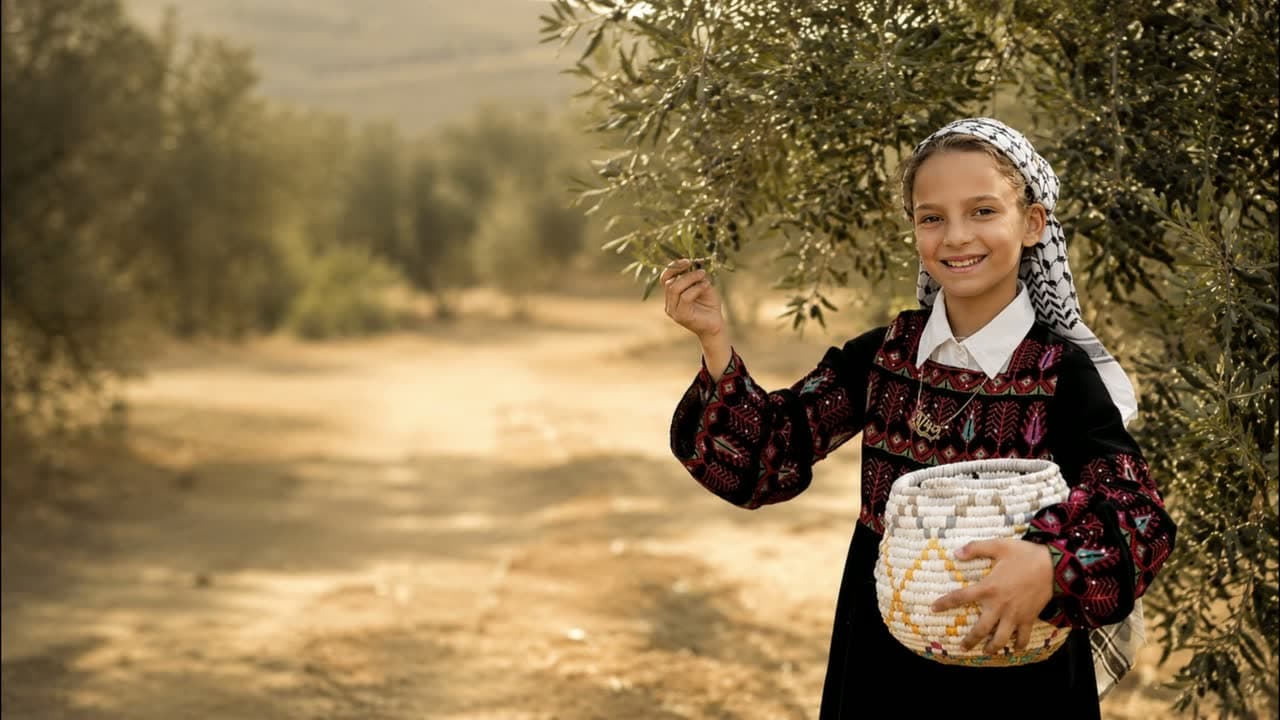
Olive season in the south. In the morning, you will visit farmers in their fields and homes around the village. You will see firsthand how Israeli settlements have been built on confiscated Palestinian land and what this means for the people trying to continue farming nearby.
You will also learn about the Palestine Solidarity Project. People in Beit Ummar have developed different forms of non-violent resistance to the occupation. These activities include accompanying farmers when there is a risk of settler violence, replanting trees that have been destroyed, and resisting home demolitions.
The village has also established a women's embroidery cooperative. You will learn about the cooperative's work and meet local activists involved in organizing and protecting the community.
The day is not structured around watching Palestinian resistance from a distance. It gives you the opportunity to speak directly with the people doing the work, understand why it is necessary, and learn what solidarity looks like in practice.
You will travel with Mousa into the South Hebron Hills. Along the way, you will pass Kiryat Arba, a major Israeli settlement built on the edge of Hebron.
The day focuses on Palestinian communities living under continued pressure from settlements and settlers. Many families in the region have lost access to large parts of their land and face harassment when attempting to cultivate fields near settlements.
Some residents live in shacks, tents, or caves while fighting to remain on land their families have lived on for generations. You will visit these communities, meet residents, and hear directly about their lives.
This is often the most difficult day of the journey. It is also one of the most important.
The people you meet are not simply waiting to be rescued or reduced to symbols of suffering. They are raising families, caring for animals, cultivating land, organizing their communities, and continuing to live under conditions designed to make remaining difficult.
You can travel by public transportation or arrange a private car in advance. Your host will explain where and how to take public transport from the village. Private transfers must be arranged before departure, with the details provided separately.
The organized journey ends when you return to Jerusalem. What you do with what you have seen begins afterward.
FAQ
Frequently asked questions.
Yes. Major destinations like Jerusalem, Bethlehem, Ramallah, Jericho, and Hebron welcome travelers every day.
Our guides live here and follow real-time updates, choosing the safest routes and adjusting plans if needed. If anything changes on the ground, you'll be informed immediately.
Yes, every tour can be tailored to your interests. Whether you want more history, more food, more politics, or a more spiritual experience, your guide will adjust the itinerary to match your style.
This journey is designed to support Palestinian people directly. Your payment supports Palestinian guides, drivers, host families, community organizations, local businesses, craftspeople, and the people welcoming you into their homes and villages.
You are not only learning about Palestine. Your visit helps sustain the communities that make the experience possible.
Several parts of the journey take place in conservative Palestinian communities and at religious sites.
Both men and women should wear modest clothing that covers the chest, shoulders, upper arms, and knees. Long trousers, long skirts, and dresses below the knee are appropriate. Shorts should not be worn during the guided program.
Following local expectations shows respect to the families and communities welcoming you and makes it easier to communicate comfortably with local people. Your guides will explain when any additional clothing or behaviour is expected.
Home-cooked meals with your host families are an important part of the experience. Other included meals will be listed clearly in your booking information.
Please tell us in advance about allergies, dietary restrictions, or religious requirements. We will do our best to accommodate them.
On request
Optional extras.
The following can be arranged on request and are subject to availability.
Extra nights with your host family
Stay longer with your host family after the organized tour ends.
Private transportation
Arrange a private transfer to the Monday morning meeting point or from Beit Ummar at the end of the journey.
Bethlehem hotel upgrade
Choose hotel accommodation in Bethlehem instead of the standard host-family stay.
Please contact us before booking to discuss availability and pricing.
The next step is a conversation
Come sit with us first.
Tell us who you are and what's pulling you here. We'll answer honestly — about safety, logistics, entry, dates, and whether this trip is right for you.